

















































This is a work in progress and has been posted due to the need for this debate: Shahadah is not an economist but a cultural writer and an African Diaspora business investor, this article is based upon this combined experience.
10/30/2007
How do we measure the weight of our cultural presence in a globalize society? We can look at the global accommodation given to our individual cultures. What impact does Africa and African people generally have on the wider world? What value does Africa represent as a separate body? The value assigned to Chinese culture and Islamic culture can be seen everywhere by the international accommodation these cultures are given. Despite Ethiopia (ኢትዮጵያ) being the cultural gem of Africa, with 70 million people, its dominances beyond its borders is extremely limited. The Amharic language is one a notable world languages, but this is due solely to population demographics. A look at internet technology shows accommodation for all scripts, DVD subtitles come in many languages including non-Latin scripts from Hebrew to Simplified Chinese, Arabic and even Hindi. The commercial value of African languages is linked to the volume or market value of African speakers purchasing DVDs, accessing in-flight services, etc.
If you book a flight online, you can select Kosher (despite Jewish people being a serious minority at 14 million), Moslem meals , these cultures have globally accommodation due to their cultural and economic dominance. There is a direct relationship thus between the economic success of cultures and their physical presence in global societies. It can be used to measure the impact or the global footprint cultures make.
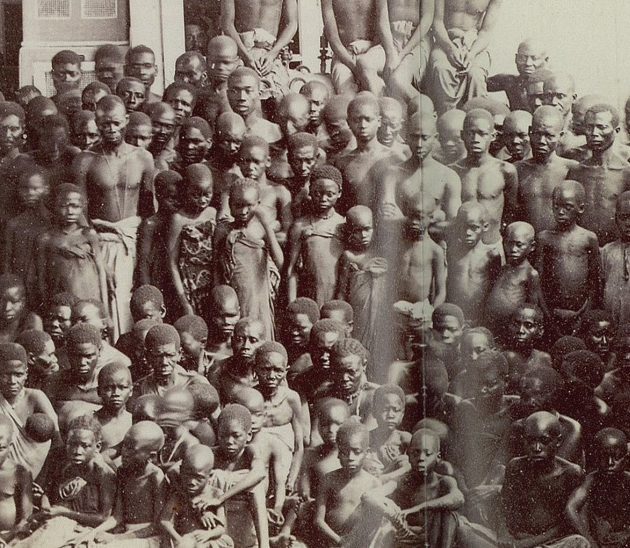
The indirect de-emphasis on Africa is by no means a racist plot but moreover a measure of the outward extent of African presents in the real world. If Africa tomorrow became an economic giant, these markets would naturally re-orientate to reflect the economic and political footprint of Africa. The reason for the low position of African cultural dominance however is another issue. The legacy of colonialism and slavery has left Africa in an endless rut. While the Asian sub-continent crawls forward Africa is caught in a desperate loop. The only exception is South Africa and for race vs. economic reasons fails makes it a peculiarity in “true” Africa. The condition in South Africa is nothing more than a Southernmost European colony, which like any European country has stock markets, etc. South Africa appears globally because of this fact. It however is not any reflection on the general people of South Africa or the designs of African politicians who manage this pre-prepared plantation.
Diminishing Markets
The opportunities in the world are diminishing, reshuffling and became inaccessible. Emerging markets in the post-computer boom era are being capitalized & reduced by the ‘big boys’ of yesterday. Small and independent is becoming more over run. As "independent" becomes a new fashionable lifestyle for the elite. The markets, which should be occupied by African cultural products, are owned and controlled by fashion liberal giants. Fair-trade products which are increasingly popular in Europe trace back to European owned farms in the Caribbean and South Africa. Eco-friendly ethnic products made by some orphan in Kenya are all distributed and controlled by Europeans. The “world Music” genre is a ‘division of X’ where X is Sony, Warner, etc. Africa is running out of market space to control and dominate.
Lack of capital is 50% of the problem; the other issue is lack of forward thinking. Inbred in the African mind is one which means Africans cannot see themselves as global trend setters the same way maybe Japanese people did in the past. The chains of colonialism and slavery cut too deep. The image of Africa exported by Europe is the image digested and believed most of all by African people. The battle against the mindset is the killing fields adding to the list: Poor leadership, denial of resources, inaccessible globalize markets, inter-African communication, redundant bureaucracy serving Europe and yes corruption where corruption represents those African agents doing Europe’s bidding by creating unstable markets to keep Africa impoverished.
Market Dilemma
If for example Europe from its total population created 70% as viable consumer. It has a rich enough consumer market to support many diverse forms of industry. For example if 20% of the market supports the film industry, this 20% may represent a figure above the critical mass for sustaining the film industry. Another overlapping section support music which again is enough to support MTV, radio shows, recording studios, lawyers, record companies, insurance agents, travel companies, etc. These industries create jobs and feed further advancements into their respective territories thus; markets expansion is directly related to increase film budgets and as long as these markets grow the industry becomes more evolved creating new positions and new markets. In the film industry specialist markets appear; natural history, art-house, etc, but the primary film markets are so rich that even if 15% of the total film consumers engage in these specialist industries it can fund and sustain elaborate ventures into say natural history films. Millions can be spent on every film fancy with the promise of returns from the market.
The dilemma for Africa is that If Europe’s market isn’t interested in say African history, Africans have no markets of their own or any political control over markets that they are a subset off, so they must remain content with secondhand products or just simple eat what is on the "mainstream" menu. Africa must create its own market share among its own people globally. And Nollywood is an example of this.
Critical Mass
Despite all the good work some Africans are doing it is does not seem to reach the critical mass for igniting the spark of revolutionary transformation. And until that spark is set-off Africa would continue to be dependent on European crumbs.
Cuisines of Africa: Case Study
But there is hope, now you can speak of Ethiopian food and in many cosmopolitan cities the middle and upper class can relate to have savored this cuisine. It is actually a form of “cultural tourism”. None-the-less Ethiopian cuisine is leaving a cultural footprint but it has a long way to go to compete with Chinese and Indian food. But what is good or promising is the market it appeals for is elite and thus is a cuisine as opposed to a cheap fast food, a pitfall Indian food has taken in Britain. If African governments, like the Chinese governments, copy and expand the Ethiopian model it would not only be an economic success but a cultural one for all of Africa.
Government and AU
Economists may debate about how important government economic policy is in fostering growth. Governmental measures can help accelerate savings and investment, and implement strategies for the absorption of new technologies. In Africa for example the cable telephone has been dominated by satellite transmitters due to the wireless mobile telephone, thus advancing communication without the burden of expensive caballing. This approach cuts out steps and this same strategy could be employed in the department of wireless internet. In South Africa some townships such as K-CAP and INK in Durban have powerful wireless transmitters which grant free internet access to the surrounding village. IT development is a key soft industry which Africa needs to be competitive in, where computer literacy is as important as normal literacy. Some countries like Tanzania have zero tax on computer technology facilitating the speedy growth of IT related business, countries like Ethiopia are desperately backward as all computer imports face ridiculous taxation which is passed onto the people who are already economically handicapped.
What was witnessed in Japan was virtually every key export industry enjoyed protection and promotion during its early stages. For example, when Japan’s young automobile industry was threatened by the European auto industry the government acted by reducing foreign imports until 1965, when Japan’s auto industry was able to compete on its own. In addition to protecting emerging industries, African government need to provide special tax credits to favored industries and direct banks to provide low-interest loans to targeted sectors.
The role of the AU in creating a single economic space must be unapologetic and revolutionary in its approach. Right now the bureaucratic and soft ‘democratic’ tactics will bring fruit to the continent in 1000 years when there are no more markets left. It is amazing how in Africa Hindi films have wider distribution in say remote Ethiopia than films from neighboring Kenya. And yes this is an area which needs government control and special protection or else how is Africa supposed to even make a local economic footprint, let alone an international one?
CONCLUSION
In the headwind of the storm that is globalization how does Africa sustain economic and cultural models of self-determination? To protect oneself economically is to invariable defend oneself cultural from the mono-culturalization. At the dining room table o market driven economies the key players set their agenda, diversity falls off as the designs become focused on unprincipled expansion. Questions of morality live in remote orbits, overshadowed by profits in the smooth guise of free market. In this unfair race feeling sorry is not a solution, it is simple join them or die. Diversity should not the vacationing ventures of cultural tourism but should be conscious and deliberate goal of every African nation. However, ‘selling’ your culture on the world market and ‘selling-out’ your culture should never be confused. Trading African finished products, African foods, African garments, African made products which reflect African culture is very different from mocking and cheapening Africaness for the entertainment of the West. But when we buy a Sony television or a Mac computer that is a culture which is making an economic statement of dominance. Africa must, without apology, convert culture into currency, capitalizing on that which is most beautiful, and in doing so reinforce it and preserve it.
0. The multiplicity of Jewish identities makes it difficult to provide reliable population figures. Most contemporary estimates place the population of Jews worldwide at about 14 million. The two largest communities of Jews are in the United States and Israel. About 5.9 million Jews live in the United States, and about 4.6 million live in Israel. About 350,000 Jews live in Canada, primarily in Toronto and Montréal. Sizable Jewish communities are found in Argentina, Australia, Russia, South Africa, Ukraine, and Western Europe. In every country other than Israel, the Jewish population is stagnant or shrinking, primarily as a result of low birth rates but also because of migration and assimilation into the dominant culture.
Microsoft ® Encarta ® 2007.
1. Muslim but spelt Moslem in the Airline food industry.
3. Japan’s GDP grew an average of 9 percent annually from the end of postwar reconstruction in 1955 until the oil crisis of 1973 (called the oil shock in Japan), when international oil prices rose dramatically. While countries often grow quite rapidly during their industrial takeoff, Japan’s takeoff was unparalleled. In its years of highest growth, from 1965 to 1970, Japan’s GDP grew an average of 12 percent a year.
4. Leadership in all sectors private and government, Leadership is not only leaders of countries.
5. An example of this is as film expanded it started to involve more CGI features which facilitated a sub-industry of CGI specialist.