

- SLAVERY
- African Holocaust
- Slavery in America
- Arab Slave Trade
- Jewish Slave Trade
- Slavery Revolts
- Modern Slavery
- Mental Slavery
- CULTURE
- Culture Complex
- Rites of Passage
- Kwanzaa
- African Agency
- Language & Africa
- Music and Dance
- IDENTITY
- African Race
- Educating a Child
- ANCIENT AFRICA
- African KingdomsPtahhotep of Egypt
- PAN-AFRICA
- Business & Africans
- African Cinema
- Art of Revolution



 |


- African Kings and Queens
- African Marriage
- Consciousness
- White Supremacy
- Business & Africans
- ICC & Africa
- African Fundamentalism
- Capitalism or Socialism
- Facts About Africa
- War and Religion
- Death of African Languages
- Garvey Economics
- Cabral Theory
- NGO and Development
- Garvey Legacy
- Willie Lynch Hoax
- Malcolm OAAU
- Ethics of the Reparations
- Afrocentrism Pseudohistory?
- Marley Film Review
- Abolition and Wilberforce
- Black Panther Critique
- Jews and Slavery
- Gay Rights
- Failure Of African Leadership
- Capitalism or Socialism?
- Female Genital Mutilation
- Failure to Engage
- Libya Invasion
- Dubois: Souls of Black folk
- Slavery in America
- Amilcar Cabral
- Agency and Africa
- Mis-Education of the Child
- African Revolt
- The Flag of African Cinema
- The Politics of Liberation
- White Supremacy
- The Horrors of 500 Years
- Africa and the Rise of Islam
- Why Kwanzaa
- Seen But Never Heard
- African Classical Music
- South Africa: 10 Years On
- Music and Dance in Religion
- White Abolition of Slavery
- A Threat to Black Studies
- Art of Revolution
- African Influence in Barbados
- Origins of Voodoo
- Black Out White Wash
- Ethiopian Slave Trade
Until lions tell their tale, the story of the hunt will always glorify the hunter
– African Proverb
Power concedes nothing without a demand. It never did and it never will
– Frederick Douglass
The most pathetic thing is for a slave who doesn't know that he is a slave
– Malcolm X
Every man is rich in excuses to safeguard his prejudices, his instincts, and his opinions.
– Ancient Egypt
Cowardice asks the question: is it safe? Expediency asks the question: is it political? Vanity asks the question: is it popular? But conscience asks the question: is it right.
– Dr. Martin L. King, Jr
What kind of world do we live in when the views of the oppressed are expressed at the convenience of their oppressors?
– Owen 'Alik Shahadah
We are not Africans because we are born in Africa, we are Africans because Africa is born in us.
– Chester Higgins Jr.
Leave no brother or sister behind the enemy line of poverty.
– Harriet Tubman

|
||||||||||||||||||||||||||||||||||||||||||||||||||||||||
Ethiopia is the symbol of African interdependence and self-determination, no other country in this magnificent continent can boast the boast that Ethiopia can:
Ethiopia has retained a rich cultural heritage. And despite the notion of being a Christian Kingdom, Ethiopia has more Muslim citizens than all of Somalia. 40-45% of Ethiopia is Islamic. And the deep relationship between Christianity and Islam makes this land unique.
BLUE NILE SOURCE OF WATER WARS 90% of the Nile, which allowed the mighty Egyptian Nation comes from the Blue Nile in Ethiopia. Lake Tana is its source. But due to the British colonial policy Egypt takes a lion share of the development potential of this resources. As a result Modern Egypt and its expanding population utilizes the Nile but threaten war if Ethiopia tries to use its own water to enhance Ethiopia. If Ethiopia utilizes the Nile it would end the horrors of poverty and transform Ethiopia economically into a fertile land. Unfortunately this would decrease Egypt flow by 50% with serious consequences for its population. Only compromises can solve this crisis. But no more can Ethiopians suffer with this rich resources unopened.
MOTHERLAND | እናት ሀገር
እናት ሀገር ይቅርታ በሌለበት አነጋገር የአፍሪካንና የአፍሪካውያንን ህብረት፤ ራስ ወሳኝነትና የአፍሪካን ዳግም ውልደት ጥሪ የሚያቀርብ ነው፡፡
KEBRA NEGAST/NAGAST (ክብረ ነገሥት)
The legacy to humanity is inarguable, but Ethiopia too left a legacy with the rise of the mighty Aksum ite empires which cast their reign as far as Arabia. But all that remains of Ancient Egypt, stone tombs which sleep out the centuries, lips sealed of those who forged their mighty walls. But for Ethiopia those Aksum ite people who cast the stones and carved Lalibela are still in control of their land, the language and the culture is not confined to the history books but is lived everyday on the streets of Addis Ababa and Asmara (Eritrea). The script of the Ancient Egyptians has lost its use in the world of today but Ge’ez (ግዕዝ)is a living script which is used across modern Ethiopia. This is the legacy which makes this land unique in the world, especially for Africa which has been the victim of the largest carving up in the history of humanity. 
The records on Ethiopian history begin with the pre-Aksum ite (አክሱም) empire, which started around 1500 B.C. This civilization shows signs of a marriage between Southern Arabia and Eastern Africa. And it is at the beginning of Ethiopian history that the most fundamental mistake is made by European scholars. European academia has become so locked in a boundary driven mentality that they view these ancient times in the context of an “Africa” and a “Arabia.” However, there was no Africa and Arabia 3500 years ago. And to see these two nations as racially separate is baseless and a projection of a modern world view of race and geography. The people who originally populated Southern Arabia arrived there from East Africa. East Africa is a mere 22 km from Arabia, and traveling by a sea vessel would have made this trip a regular breeze. Today the “out of Africa” theory proves that “modern” humans migrated via the Southern Arabian route, up into Central Asia. Since this migration was, a continuous human undertaking highlights the facts that native African people were freely traveling, at least, back and forth between modern-day Arabia and perhaps the rest of the world. The Sabian culture is thus an African civilization, and historical artifacts located in Southern Arabia do not implicate a non-African origin in anyway shape or form. Later migrating Arabs moved southward into Southern Arabia and changed the racial profile of this area. The argument here is that the forebears of the Afro-Asiatic Ethiopian culture is uniquely African and not; influenced, a child of Arabia, or a “half Arab” society. Clearly, the legacy of Europeans downsizing and obscuring African history is not lost here. And just as the Ancient Egyptians have been labeled as a Mediterranean people who came out-of-the-blue and settled in Africa. There is a similar attempt here to diminish Ethiopian African history.
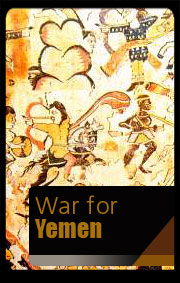
GREAT BATTLE FOR YEMEN
The Ethiopians never met this request because an Ethiopian general named Abraha took control of the Yemenite throne and created an independent nation. After Abraha's death one of his sons, Ma'd-Karib, went into exile while his half-brother took the throne. After being denied by Justinian, Ma'd-Karib sought help from Khosrau, who sent a small fleet and army under commander Vahriz to depose the current king of Yemen. After capturing the capital city San'a'l, Ma'd-Karib's son, Saif, was put on the throne. Justinian was ultimately responsible for Sassanian maritime presence in Yemen. By not providing the Yemenite Arabs support, Khosrau was able to help Ma'd-Karib and subsequently established Yemen as a principality of the Sassanian Empire.
GE'EZ
The genetic trail shows that Arabs are descendants of Africans who left Africa some 45,000 years ago. Only Arab and African people share the M89 and M172 genetic markers. It is clear that populations would have existed and re-entered Africa up until and including the modern era. To believe that these people immediately after entering a place now know, as the Middle East became Arabs is absolutely un-academic. From the perspective of the people living in this land they wouldn't have viewed themselves in these rigid terms. And to articulate history on a limited racial premises is political and distorted. Until the 1970s, Afaan Oromo was written with either the Ge'ez script or the Latin alphabet Then during the early 1970s, the Oromo Liberation Front (OLF) chose the Latin alphabet as the official alphabet to write Afaan Oromo. Between 1974 and 1991 under the Mengistu regime the writing of Afaan Oromo in any script was forbidden, though limited usage of the Ge'ez script was allowed. On 3rd November 1991 the OLF convened a meeting of over 1,000 Oromo intellectuals to decide which alphabet to use to write Afaan Ormo. After a many hours of debate, they decided unanimously to adopt the Latin alphabet. Unfortunately many Ormo have stopped using the indigenous African Ge'ez script after 1991 and began formally writing Oromoia in a latin format called called Qubee. Words are subsequently excessively long to accommodate for the inadequacies of latin. It is speculated that the motivation for the change was to create a distinctive cultural identify from the "semitic" groups who have historically suppressed their culture. How a European script could be used over a related African script speaks to the dangers of so-called liberation when those liberating forces are ignorant of the broader issues.
Biblical canon
The current 81 book version was published in 1986, containing the same text as previously published in the Haile Selassie Version of the Bible, only with some minor modifications to the New Testament translation. The Broader Canon has never been fully published or scrutinized, but is said include all of the Narrower Canon, as well as two Books of the Covenant, four Books of Sinodos, an Epistle to Clement, and the Didascalia. These may not all bear close resemblance to works of these titles known in the west.
The Futuh al-Habasha records Ahmad ibn Ibrihim al-Ghazi visited the tomb of Ashama ibn Abjar in Negash during his invasion of the province of Tigray (around 1537). Negash is also known for the Negash Amedin Mesgid mosque. Harar and Dire Dawa. Are two other important places for Islamic Ethiopian heritage. Harar is famed for their stone walls which protected the Muslim inhabitants. For centuries the city was closed to non-Muslims. LANGUAGE ( ግዕዝ )
LAND LOCKED
THE FRUIT OF WAR
THE MUSLIM CHRISTIAN WARS (1500-1550)
The fruit of this were the almost erasure of culture on both sides. From as early on as the 13th century the Muslim-Christian relationship was showing signs of strain, not for religious reasons but due to the competition for Muslim controlled trade routes. However, in the 1490’s the emergence of a new charismatic Islamic leader by the name of Mahfuz established himself in Zeila (modern day Somalia). He declared a Jihad against Christian Ethiopia and made numerous raids into the highlands of Shoa until he was halted by Emperor Lebna Dengel. However more hostile Islamic leaders were on their way in the form of Ahmed Gragn the Left Handed, or Ahmed Ibn Ibrahim Al Ghazi. He deposed the sultan of Harar and pledged to carry on the Jihadist campaign of Mahfuz. Well supplied by Ottoman allies he was able to conquer most of Eastern and Southern Ethiopia by 1532. Lebna Dengel responded by calling on the Portuguese stationed in Massawa. The forces meet near Lake Tana and the Portuguese general, who was son of Vasco da Gama, left the battle without his head. The Muslim army was victorious. It was not until a new Ethiopian emperor, Galawdewos, took the thrown in 1543 that the Muslim army was dispatched. In the glory of victory Galawdewos decided to capture the Muslim strong-hold of Harar but his plan failed and he lost his life in the process. The war were costly thousands of people lost their lives Christian monarchy was nearly extinguished and the once might Islamic state of Adal was in ruin. Manuscripts, art, religious buildings on both sides lay in ruin.
UNLUCKY HARVEST
According to UNCTAD (2003), 17 of the 20 most important export products are commodities or semi-finished goods. As there are no processing industries, Africa also lacks diversified products,
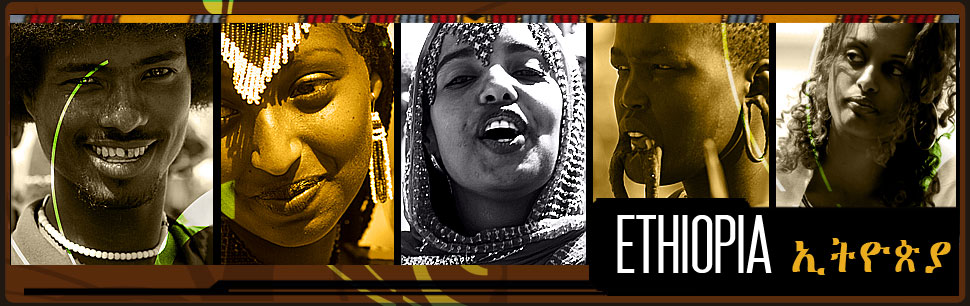
A rainbow of people
Starbucks and Ethiopian Coffee FarmersSelome ArayaEvery day in the early hours of the morning, the farmers of the Oromia region head out to the coffee plantations in the Ethiopian highlands for a day’s work. Often walking barefoot for miles to arrive, the farmers use their bare hands to pick the coffee beans off of steep mountains in high altitudes and the blazing sun. For these farmers and their families, coffee farming is the only means to earn a living in one of the poorest countries in the world. They earn less than a dollar a day. Recently, there has been a growing controversy over whether or not Ethiopian farmers and the Ethiopian economy are receiving fair treatment from the multinational corporation. This debate has sparked a fervent campaign by fair trade organizations, workers’ unions, and the Ethiopian government, who are publicly challenging the ethics of the company. Conducting Business Responsibly Starbucks maintains that it enjoys a positive relationship with coffee farmers. With their “commitment to social responsibility”, Starbucks developed an integrated approach to coffee sourcing with C.A.F.E. (Coffee and Farmer Equity Practices), a set of socially responsible coffee-buying guidelines. This sustainable strategy is said to improve working conditions for farmers, helping them earn more while protecting the environment. Starbuck commits itself to paying premium prices for all of its coffee and attempts to purchase coffee that is certified as Fair Trade Coffee. “Starbucks global purchases of Fair Trade Certified coffee totaled 11.5 million pounds in fiscal 2005, making it the largest purchaser of Fair Trade Certified coffee in North America” the company stated in a brochure. “In addition to paying premium prices for all of our coffees, our investment in social development projects and providing access to affordable loans in coffee growing regions has been recognized for its leadership within the industry,” Starbucks said in a press release statement in October 2006.
Coffee is also a central element of Ethiopian culture, with traditions that date back to the 10th century, when the first tree was domesticated in the south-western highlands of the country. Coffee is so important to the daily routine of life in Ethiopia that “coffee ceremonies” happen daily throughout the country. A third of the national production is consumed domestically.
Starbucks’ potential impact on the Ethiopian market Should Ethiopia be successful in trade marking its beans, it will enable the country to control the use of its beans in the market, giving its farmers a larger portion of the retail price. "Securing the trademark for its Sidamo, Harar and Yirgacheffe coffee beans could have allowed the country to increase its negotiation leverage through control of the names and ultimately (derive) a greater share of the retail price in the global market," Ethiopia's Foreign Ministry said in a statement. The potential benefits for the Ethiopian market are enormous, according to Hailu Fitsum, the Second Secretary of Trade Investment at the Ethiopian Embassy. “When producers can grow and prosper by not only improving production and quality but also by building up the value of their intellectual property portfolios, then everybody in the coffee industry – including partners in retail and distribution as well as consumers – reap benefits.” Fitsum adds that in a case like Ethiopia’s, “Stronger negotiating power would enable millions of coffee farmers and traders to prosper and invest in the future of these fine coffees.” Ethiopia’s Position Tadesse Meskela, the representative for the Oromia Coffee Farmers Cooperative Union in Ethiopia, agrees with Fitsum. According to Meskela, Starbucks sells the coffee for $14.00 per pound, but only pays $1.20 per pound, which does not even cover the cost of production. However, Mr. Meskela explained that the coffee farmers’ issue is also with the World Trade Organization, not only with Starbucks. In a telephone interview, he said, “The WTO controls a huge amount of the profit trade and a change needs to be made in international trade laws. The price we [farmers] receive is very low and it’s lower because of unfair trade laws.”Meskela is working hard to save his 74,000 impoverished coffee farmers, and he is on a mission to find buyers who are willing to pay a fair price for their coffee. Meskela is also the main character in Black Gold, a documentary that juxtaposes the experiences of the coffee farmers with that of the consumers who purchase the product on the other side of the world. “This film highlights the vulnerability of coffee farmers and the disconnect that exists between poor farmers and huge profits. Oxfam seeks to correct the imbalances of power at the root of unfair trade,” stated Petchers.
While Starbucks denies being behind the trademark-blocking process, the company doesn’t think that trade marking is in the best interest of the farmers and the Ethiopian economy. “Were trademarks to be implemented -- roasters might shy away from buying the coffees for fear of becoming embroiled in complicated legal disputes. Or worse, they may buy the coffees and just market them without the trademarked names. Letting the high quality beans go to market without a geographic identification would completely undermine the value of the brand,” Starbucks said in a statement. The Ethiopian government also asked Starbucks to sign an agreement that would enable Ethiopia to have ownership of its coffees. However, Starbucks refused to sign such an agreement, as the company believes that if Ethiopia were to trademark its products it would be excluding itself from the market. According to Hailu, this is grossly offensive. “The only way this statement could be accurate is if Ethiopia completely mismanages the trademarks once they have been acquired, and I would hope that Starbucks is not assuming that Ethiopia is not capable of managing the Intellectual Property assets related to one of its most important exports,” Hailu says.
This position is not receiving much press, however. The company received over 70,000 phone calls and faxes from concerned consumers showing support for the farmers. But does such negative publicity have any affect on the house-hold name and billion dollar company? “Probably not,” says a Starbucks employee in New York City who spoke on condition of anonymity. “People are so hooked on coffee that they are not going to be affected by something that is happening so far away. The only people protesting Starbucks are a minority of activists. Everyone else just thinks about their own problems.” The employee also spoke highly of Starbucks treatment of its employees. “They treat their employees better than most corporate companies and they give a lot back to the community,” he said. Power positioning
Senait Assefa, a resident of New York from Ethiopia, believes that strengthening the position of coffee farmers in the international market should be the focus of the efforts, not Starbucks. “The coffee producers should band together to control the supply of coffee in the international market, thereby enabling themselves to dictate their own terms (similar to how oil producing countries manipulate the price of oil by reducing or increasing production & supply)”, said Assefa.However, Assefa admits that this might not work.“While oil is a resource only few countries are endowed with, almost anybody can grow coffee,” she added. Although coffee is a crop that can grow in different regions, the high quality of Ethiopian coffee is what makes it so unique. As Ethiopian farmers continue to work hard to produce such fine quality coffee, their position in the international trade market is just beginning to receive worldwide attention, thanks to the tireless work of Meskela and others. While the battle to trademark their coffees continues, the coffee farmers are also left to struggle with trade laws that make them invisible in the chain of international players. _______________________________
|